Sauna Sizes: What Size Sauna Do I Need? (1 to 6 Person)
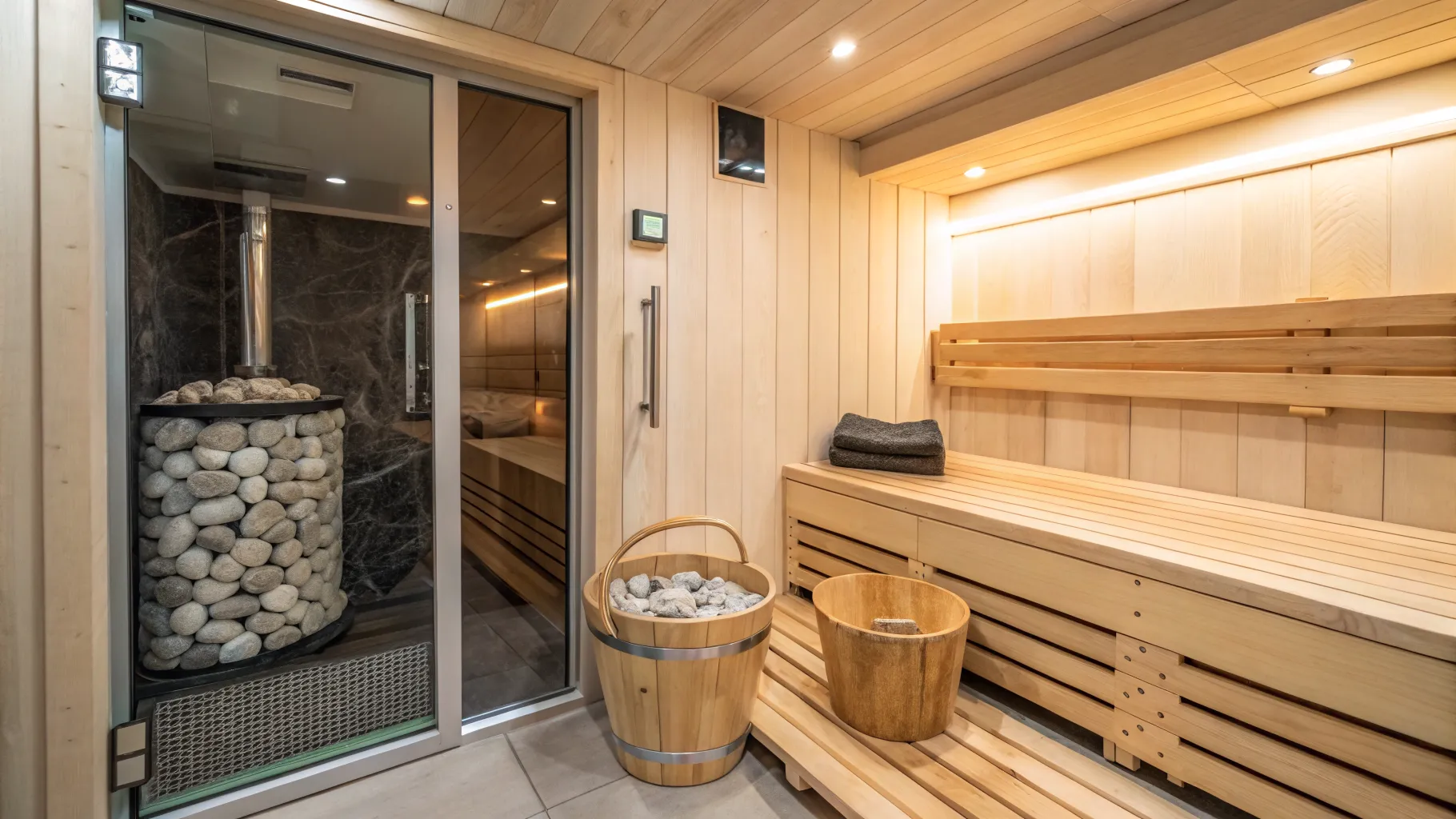
A traditional cabin needs roughly 1 kW of heater per cubic metre of space, and a UK 13 amp plug socket caps you at just under 3 kW, so the real first question is not “how many people” but “how am I powering this.” Get the heater and the wiring right and the bench layout follows. Here is how to size a sauna properly for a UK home, garden or spare room, with the person-rating inflation stripped out.
Start with power, not people
Most sizing guides count seats. In the UK the binding constraint is usually electricity, so settle that first.
A standard 13 amp plug socket delivers just under 3 kW (about 2,990 W) continuously, and you should not run it right at that ceiling for long periods. That is enough for a small 1.5 to 2 kW infrared cabin (a 1 or 2 person unit), and even then it should sit on its own dedicated circuit rather than sharing a ring with a kettle or washing machine. Anything bigger has to be hardwired. A 6 kW heater draws about 26 A and an 8 kW heater about 33 A at 230 to 240V, so both need a dedicated circuit installed by a Part P certified electrician, with RCD protection, and weatherproof enclosures for any outdoor components. UK retailers such as Eden Hut flag this Part P requirement for exactly this reason: it is not optional.
This is the single biggest fork in the decision, and it splits cleanly:
| Sauna type | Typical power | Power supply | People (honest) |
|---|---|---|---|
| Infrared, 1 person | 1.2 to 1.6 kW | 13 amp plug, dedicated | 1 |
| Infrared, 2 person | 1.6 to 2 kW | 13 amp plug, dedicated | 1 to 2 |
| Infrared, 3 to 4 person | 2.4 to 3 kW+ | Often hardwired | 2 to 3 |
| Traditional electric | 6 to 9 kW | Hardwired, dedicated circuit | 2 to 4 |
If you cannot run a new circuit, a plug-in infrared cabin is your realistic ceiling. If you can, the choice opens up. We cover the heat experience difference in full in our guide to traditional vs infrared saunas; this page is about fitting the box and powering it.
Sizing the heater to the cabin
For a traditional electric sauna, the working rule is about 1 kW of heater output per 1 cubic metre of well insulated cabin volume. Measure length x width x height in metres and multiply. A 2m x 2m x 2m cabin is 8 m3, so it wants roughly an 8 kW heater.
Manufacturer specs back the rule up. The Harvia Cilindro PC90 9 kW page lists a recommended room volume of about 283 to 494 cubic feet, which is roughly 8 to 14 m3, and runs on 230V single phase. That maps onto the per-cubic-metre rule for cabins in the 8 to 14 m3 range.
Heat-leaking surfaces change the maths. Glass and uninsulated outside-facing walls bleed heat, so you add capacity: as a rough guide, treat each square metre of glass or uninsulated wall as if it added about a cubic metre to the volume. In practice a glass door or a decent window pushes you up by 1 to 2 kW. A 7 m3 cabin with a full glass door is better matched to an 8 kW heater than a 7 kW one.
Resist the urge to oversize. A bigger heater in a small cabin is wasted money, and oversizing the cabin relative to the heater means longer warm-up and higher running cost. Heating air you never sit in is the most common avoidable expense, so size the heater to the actual volume rather than buying the biggest one available. And yes, a bigger sauna costs more to run: more cubic metres means more kilowatts and a longer time at temperature on every session.
What person-ratings really mean
Capacity labels are optimistic by about one person. A “4 person” sauna comfortably seats 2 to 3 adults; a “6 person” seats about 4. The reason is bench width: manufacturer ratings often assume only 18 to 20 inches (about 46 to 51 cm) per person, while most adults want 22 to 24 inches (56 to 61 cm) to sit without touching shoulders.
Two quick reality checks:
- Subtract one person from any rating for comfortable use.
- Take the interior floor area in square feet and divide by two for realistic seated occupancy.
Real cabin dimensions make this concrete. Clearlight Saunas UK lists its 1 person Premier IS-1 at 102 x 112 cm (1.14 m2) and the 2 person IS-2 at 127 x 112 cm (1.42 m2). Its 4 person Sanctuary Yoga is 193 x 152 cm (2.93 m2), which by the floor-area rule realistically seats about three. The numbers line up with the “subtract one” rule rather than the badge on the box.
How much sauna do you need to lie down?
This is where many guides go quiet. To stretch out flat you need an uninterrupted bench at least 180 to 190 cm long (6 ft to 6 ft 3 in) and about 60 cm deep. A compact 2 person cabin around 4 ft x 6 ft seats two people side by side comfortably, but nobody is lying down in it. You generally need a 5 ft x 7 ft interior (about 1.5 m x 2.1 m) before anyone can lie flat, and more again if two people want to lie down at once.
So the honest size ladder reads:
| What you want | Minimum interior |
|---|---|
| One person seated | About 1 x 1.2 m |
| Two seated side by side | About 1.2 x 1.8 m (4 ft x 6 ft) |
| One person lying flat | About 1.5 x 2.1 m (5 ft x 7 ft) |
| Two seated plus room to lie | 2 m+ in at least one direction |
Ceiling height
Recommended interior ceiling height for a traditional sauna is about 7 ft (210 cm) minimum, ideally up to 8 ft if you want a proper two-tier bench. Heat rises, so the upper bench is where the real sweat happens; drop below 7 ft and that upper tier becomes cramped and hard to heat. Infrared cabins are more forgiving and work at 6.5 to 7 ft because radiant panels heat you directly rather than relying on a column of hot air.
This matters indoors. Typical UK rooms have ceilings around 2.4 m, which is fine for a freestanding traditional cabin (its own roof sits below yours) but tight if you were hoping to build a two-tier room-within-a-room. Measure the actual usable height before you commit.
Fitting it into a UK home or garden
Two practical points the US-centric guides skip.
Indoors, remember that flat-pack panels are often around 2 m long. Measure your doorways, hallway turns and stair access, not just the final floor footprint. A cabin that fits the spare room is no use if the panels will not get up the stairs. Spare bedrooms and garages are the usual homes; a garage suits a traditional cabin well because the electrics and ventilation are simpler to run.
Outdoors, you have more freedom on size but planning rules to respect. Most UK garden saunas fall under Permitted Development as outbuildings, which means a maximum total height of 2.5 m if the cabin is within 2 m of a boundary, no more than 50% of the garden covered by outbuildings, and nothing forward of the principal elevation of the house. The government-backed Planning Portal sets out the full limits. Permitted Development does not apply to flats or maisonettes, listed buildings need permission for any outbuilding, and on designated land (conservation areas, national parks, AONBs) a sauna to the side of the house needs permission too. Running paying clients through it counts as commercial use and also needs permission.
Leave working room around an outdoor cabin as well: a clearance of roughly half a metre on the accessible sides keeps airflow and maintenance simple. Our outdoor vs indoor sauna guide weighs these trade-offs in detail, and if a round cabin appeals, the barrel sauna guide covers how those footprints differ.
A quick way to choose
- Decide your power source first. No new circuit possible? Plug-in infrared, 1 to 2 person.
- Pick how you want to use it: seated only, or able to lie down. Lying down means a 5 ft x 7 ft interior floor minimum.
- Subtract one person from any capacity rating, or divide interior square footage by two.
- For a traditional cabin, size the heater at about 1 kW per cubic metre, then add 1 to 2 kW for a glass door or window.
- Check the height: 7 ft minimum for traditional, 6.5 to 7 ft fine for infrared.
- Outdoors, confirm Permitted Development; indoors, confirm the panels physically fit through your doors.
For the wider decision (build quality, ventilation, where the money goes), our home sauna buying guide ties it all together.
Frequently asked questions
What size sauna do I need for 2 people? For two people seated side by side, an interior of roughly 1.2 m x 1.8 m (about 4 ft x 6 ft) is comfortable. If you want either person to be able to lie flat, step up to about 1.5 m x 2.1 m (5 ft x 7 ft), because a full lie-down needs an uninterrupted bench of 180 to 190 cm.
Can I run a sauna from a normal 13 amp plug socket? Only a small infrared cabin. A 13 amp socket gives just under 3 kW continuously, which covers a 1.5 to 2 kW infrared unit (1 to 2 person), and even that should be on its own dedicated circuit. Traditional heaters of 6 to 8 kW draw 26 to 33 A and must be hardwired on a dedicated circuit by a Part P certified electrician.
How many people can a 4 person sauna really fit? Comfortably two to three adults. Person-ratings often assume only 46 to 51 cm of bench per person, while most adults want 56 to 61 cm. A reliable check is to divide the interior floor area in square feet by two for realistic seated occupancy.
What kW heater do I need for my sauna size? About 1 kW per cubic metre of well insulated cabin volume. Multiply length x width x height in metres: an 8 m3 cabin needs roughly an 8 kW heater. Add 1 to 2 kW if you have a glass door or window, since those surfaces leak heat.
Do I need planning permission for a garden sauna in the UK? Usually not, if it stays within Permitted Development: 2.5 m maximum height within 2 m of a boundary, under 50% of the garden covered by outbuildings, and not forward of the front of the house. Permission is needed for flats, listed buildings, designated land such as conservation areas and AONBs, and any commercial use. Check the Planning Portal for your exact situation.
Is a bigger sauna more expensive to run? Yes. More cubic metres means a bigger heater, a longer warm-up and more energy held at temperature every session. Size the cabin to how you actually use it and match the heater to that volume rather than buying the largest available, which only adds cost and warm-up time.
More from Baltic Spa
 Reviews
The Best Public Saunas in London for 2026, Tested and Ranked
We tested and ranked the best public saunas in London for 2026, from £9.50 community baths to Canary Wharf's 60-person contrast therapy hall.
 Infrared Saunas
Infrared Sauna Blankets: How They Work and Who They Suit
How an infrared sauna blanket works, what the layers and EMF claims really mean, who they suit and who should avoid one, from an evidence-first UK guide.
Sauna Stones Calculator: How Many Kg of Stones Do You Need?
Free sauna stones calculator: enter your electric heater's kW or your wood stove size and get the recommended stone weight in kg, plus how many boxes to buy.