What Is a Banya? The Russian and Baltic Sauna Ritual Explained
What a banya actually is
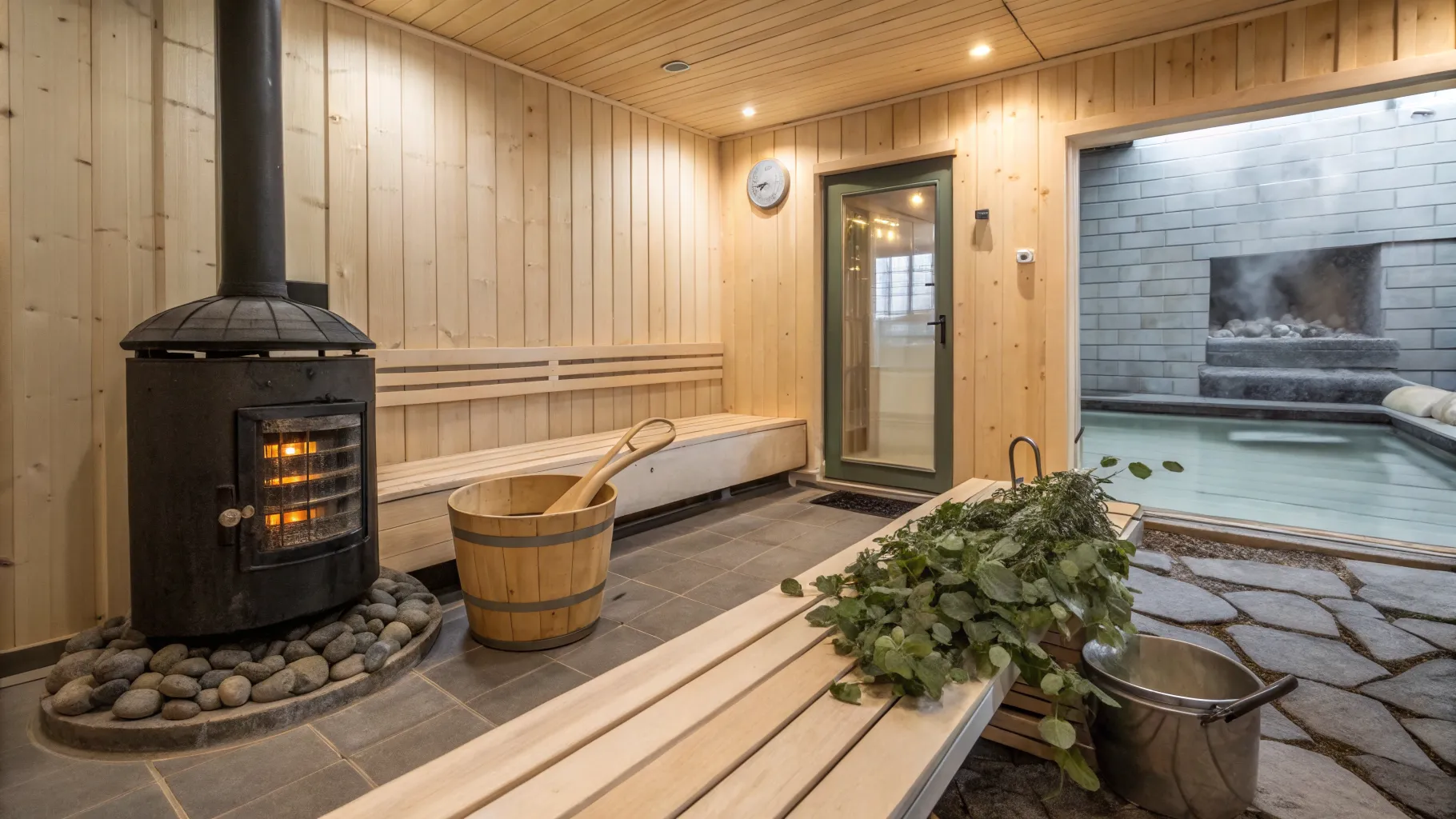
A banya is the traditional Russian and Eastern European steam bath, a wood-fired wet-heat ritual with more than a thousand years of history behind it. The detail that separates it from every other bathing tradition, and the one most short articles bury halfway down the page, is this: a banya usually runs cooler than a Finnish sauna but feels considerably hotter, because the air carries far more moisture. Add the venik, a bundle of leafy birch or oak branches used to waft heat and gently whisk the body, and you have an experience that is closer to a full bathing ceremony than a quiet sit in a hot box.
The word itself simply means “bath” across Russian and several Slavic and Baltic languages. The tradition is often labelled Russian, but it belongs just as much to the Baltic and wider Eastern European world, which is part of why it travels so well and feels so familiar across northern cultures.
Banya, Finnish sauna and Turkish hammam compared
The three great steam traditions are often lumped together, but they sit at very different points on the heat-and-humidity scale. Getting this right is the key to understanding why a banya feels the way it does.
| Tradition | Typical heat | Humidity | The signature element |
|---|---|---|---|
| Turkish hammam | Around 40 to 50°C | Very high, often near 100% | Soap-foam scrub and massage on a heated marble slab |
| Finnish sauna | 80 to 100°C | Low, around 5 to 15% | Dry heat with short bursts of steam |
| Banya | Commonly 60 to 70°C in UK venues; traditional Russian parilki can run hotter | Moderate to high, roughly 40 to 70% | The venik whisking and the cold plunge |
Note the honest range on banya heat. Some authentic Russian parilki (the steam room) run well above 90°C, while most experiences in Britain sit cooler with heavier steam. Because moist air transfers heat to your skin far more efficiently than dry air, a 65°C banya can feel more intense than an 85°C Finnish sauna. The hammam works the other way, cool air saturated with moisture, built around the scrub rather than the heat. The banya alone is built on contrast: hot steam followed by genuine cold, usually a plunge pool. If you want a fuller side-by-side of dry and moist heat, see our guide to traditional versus infrared saunas.
The steam: löyly and the stove
The heat in a banya comes from a wood stove topped with stones. Ladle water over those hot stones and you get löyly, the burst of steam shared with the Finnish sauna. The superheated vapour rises to the ceiling, cools, and rolls back down over the bathers in a slow convective loop. The stones matter more than people realise: they act as a heat store, holding warmth and releasing it evenly so the temperature does not swing wildly each time the door opens.
One technical point that separates a real banya from a hot shed: steam should be made from a generous mass of stones, not from steel. A traditional banya stove has three parts, a firebox, a rock chamber and a water tank. A “white” stove vents its smoke out through a chimney so none of it enters the steam room, unlike the older “black banya” smoke baths. A well-loaded stone mass can hold gentle heat for many hours. If you are weighing your heating options for a home build, our notes on wood-fired versus electric saunas cover the trade-offs in detail.
The venik: does it hurt?
The venik (the leafy whisk) is what makes a banya a banya. It is a tied bundle of branches, soaked in very hot water for ten to fifteen minutes until the leaves go soft and release their oils. Birch and oak are the most common woods, with eucalyptus, linden and juniper also used. Birch carries a fresh, minty scent and is traditionally favoured for skin and breathing; oak has broader, sturdier leaves that hold more steam and give a more grounding feel.
Here is the reassurance most people are looking for, because it is the single biggest worry newcomers have. The venik treatment, called parenie, is not a beating. A practitioner uses the whisk to fan waves of hot air down onto you, then presses and pats the warm leaves against your skin. It drives heat into the body, stimulates circulation, lightly exfoliates and releases aromatic oils. The sensation is closer to thousands of tiny warm fingers than anything painful. It is generally gentle and adjusted to the person receiving it.
Etiquette and the heat-cool-rest cycle
A banya is a cycle, not a single sitting. The rhythm is steam, cool, rest, then repeat.
- Shower first. This is non-negotiable for hygiene and it preps your skin.
- Wear the felt hat. That distinctive wool or felt cap protects your head and hair from the fierce heat at ceiling level and helps regulate your body temperature.
- Sit on your towel. It keeps things hygienic and stops you burning on hot wood.
- Move quickly through the door. Heat escapes the moment it opens, so enter and exit promptly.
- Keep round one short. Five to ten minutes in the parilka is plenty to begin with.
- Then cool, properly. A cold shower, a dousing from a bucket, or full submersion in a cold plunge pool, head included. The contrast is the entire point.
- Rest for twenty to thirty minutes. Sit in the lounge, get some fresh air, breathe deeply and rehydrate before going back in.
On hydration, you lose both water and salts as you sweat, so drink water, herbal tea, or the traditional kvass or mors many venues serve. Skip the alcohol, for reasons that are as much about safety as tradition. On clothing, classic same-sex sessions are taken nude, but mixed and private sessions use swimwear or a wrap for modesty. At UK venues you can expect swimwear or a towel to be the norm.
Is a banya good for you, and is it safe?
This deserves an honest answer rather than wellness hype. The strongest published evidence sits with regular heat bathing in general. A long-running Finnish study (the Kuopio Ischaemic Heart Disease cohort) found that more frequent and longer sauna sessions were associated with lower rates of fatal cardiovascular events, high blood pressure, stroke and dementia. Researchers think the mechanism resembles moderate exercise: heat raises blood flow to the skin and may improve how the blood vessels function. The peer-reviewed overview in Mayo Clinic Proceedings is a sober place to read the evidence for yourself. These are associations, not promises, and a banya does not detox or cure anything.
Safety comes first. Heat bathing is not suitable for everyone. It should be avoided with unstable angina, a recent heart attack, or severe aortic stenosis, and approached with care if you have heart failure, low blood pressure or a tendency to faint, are pregnant, or are running a fever or infection. Broken or irritated skin and the venik do not mix. For most stable, healthy adults, sensible limits apply: keep each round to around twenty minutes or less, cool down gradually, hydrate, and never combine the heat with alcohol, which raises the risk of dangerous drops in blood pressure and irregular heart rhythm. If you have a heart condition or are pregnant, speak to your GP before you start.
Where to try a banya in Britain
The best-known authentic operator in the UK is Banya No.1, which brought the Russian banya back to London. Its Hoxton bathhouse (17 Micawber Street, London N1 7TB) opened in 2012, the first Russian banya in the capital since the old Jewish baths closed during the war. A second branch followed in Chiswick (404 to 406 Chiswick High Road, London W4 5TF) in 2021. Both offer the full ritual: parenie with the venik, felt hats, a cold plunge pool and traditional kvass and mors. For a wider look at heat-bathing venues in the capital, browse our roundup of the best saunas in London.
Building the banya experience at home
You can recreate much of the ritual at home, but a true banya asks more of your kit than a standard sauna. You need a stove that holds a large mass of stones and lets you throw water over them for steam.
The Harvia Legend is a wood-burning sauna heater designed for exactly this. The Legend 150 suits a room of roughly 6 to 13 cubic metres, takes a substantial 120 kg stone load, and has an open stone compartment so you can ladle water across the whole outer surface for proper banya-style steam. That large stone mass is what gives you good steam at lower, more banya-appropriate temperatures. For choosing between a wood-burner and an electric unit, and sizing your cabin, start with our home sauna buying guide and our best home sauna picks for the UK.
One regulation almost every other article ignores: Smoke Control Areas. Across much of urban Britain you may not emit smoke from a chimney unless you are burning authorised fuel or using a DEFRA-exempt appliance, and most wood-fired sauna stoves are not on that exempt list. That can make a wood-fired banya unsuitable for many town and city gardens. Check your council’s smoke control area rules before you commit, alongside the usual flue and building-regulation considerations. In a smoke control area, an electric heater that still takes a deep stone load and tolerates water may be the more practical route to the banya feel.
Frequently asked questions
What does the word banya mean? It simply means “bath” in Russian and several Slavic and Baltic languages, and refers to the traditional wood-fired steam bathhouse and the ritual that goes with it.
How hot is a banya, and why does it feel hotter than a sauna? Many UK banyas run around 60 to 70°C, cooler than a Finnish sauna’s 80 to 100°C, though traditional Russian steam rooms can run hotter. It feels more intense because the humidity is far higher, and moist air transfers heat to your skin much more efficiently than dry air.
Does the venik birch whisking hurt? No. The treatment, called parenie, fans hot air over you and gently presses the soft, soaked leaves against your skin. It is designed to feel like waves of warmth, not a beating, and it is adjusted to suit the person.
What do you wear in a banya in the UK? Traditional same-sex sessions are often nude, but at UK venues swimwear or a towel is standard, and most people wear a felt hat to protect the head from the heat.
Can I have a banya if I have a heart condition or am pregnant? Speak to your GP first. Heat bathing should be avoided with conditions such as unstable angina, a recent heart attack or severe aortic stenosis, and approached with caution during pregnancy. Never combine it with alcohol.
Can I turn my home sauna into a banya? You can get close if your stove holds a large stone mass and lets you pour water over the stones for steam, as the wood-burning Harvia Legend does. First check whether you live in a Smoke Control Area, because most wood-fired stoves are not DEFRA-exempt and may not be permitted in urban gardens.
More from Baltic Spa
 Reviews
The Best Public Saunas in London for 2026, Tested and Ranked
We tested and ranked the best public saunas in London for 2026, from £9.50 community baths to Canary Wharf's 60-person contrast therapy hall.
 Infrared Saunas
Infrared Sauna Blankets: How They Work and Who They Suit
How an infrared sauna blanket works, what the layers and EMF claims really mean, who they suit and who should avoid one, from an evidence-first UK guide.
Sauna Stones Calculator: How Many Kg of Stones Do You Need?
Free sauna stones calculator: enter your electric heater's kW or your wood stove size and get the recommended stone weight in kg, plus how many boxes to buy.