Sauna Door Guide: Glass, Wood and What to Look For
Sauna Door Guide: Glass, Wood and What to Look For
The sauna door is easy to treat as an afterthought, but it is one of the few parts of a sauna that affects safety, heat loss and the whole feel of the room at once. Get it right and the cabin holds its heat, looks the part and is safe to use; get it wrong and you leak warmth, or worse, end up with a door that does not open the way it should. This guide explains the choices, glass or wood, the sizing, and the safety rules that are not optional.
If you are planning a whole build, read it alongside our home sauna buying guide.
Glass or wood: which sauna door is right?
The first decision is the material, and both have a genuine case.
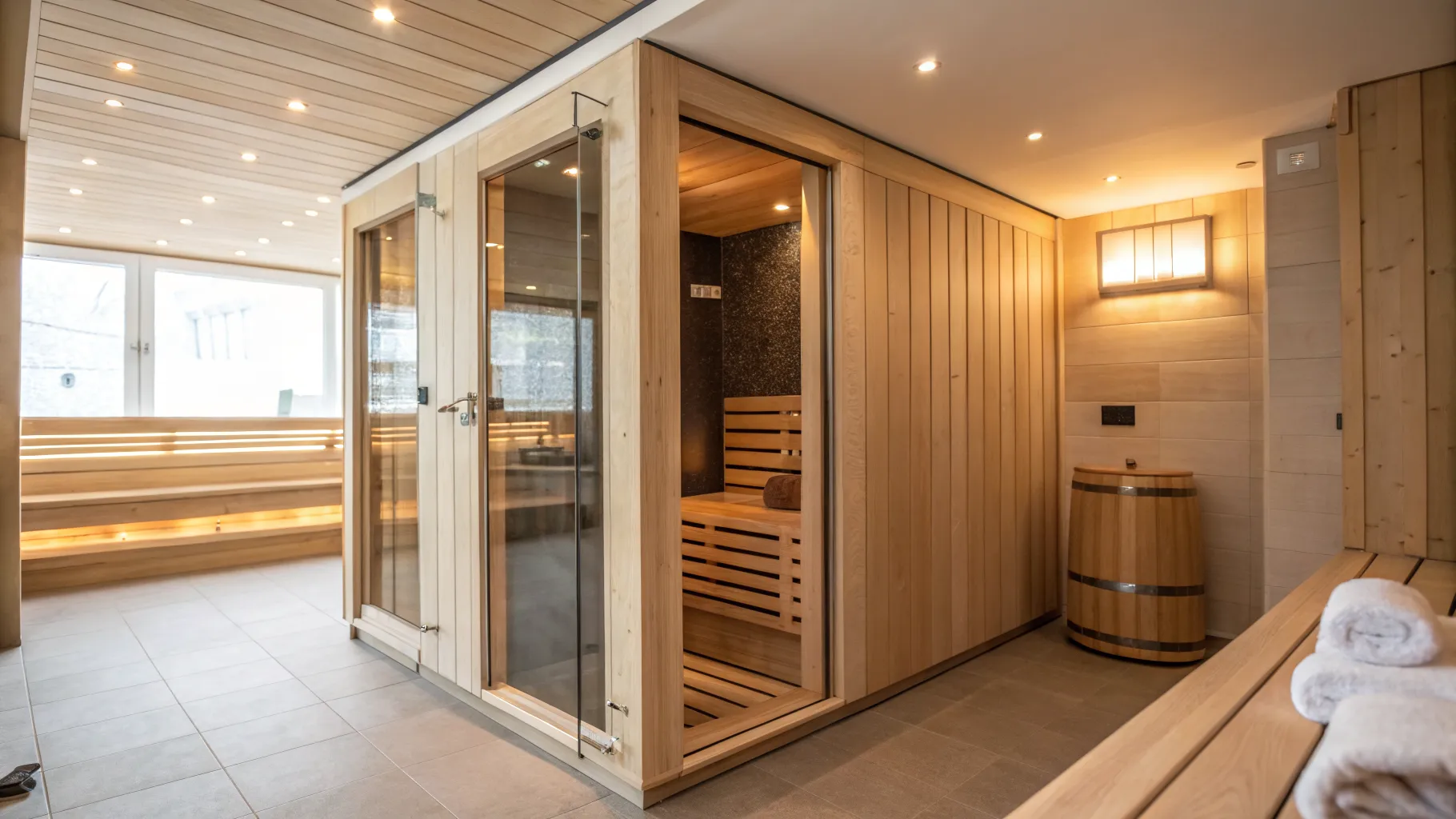
A glass sauna door (almost always toughened glass in a timber or aluminium frame) maximises light and makes a small cabin feel open rather than boxed in. It is the modern look, lets you see in and out, and suits indoor saunas and anyone who feels closed in by solid walls. The trade-off is slightly more heat loss than a well-insulated wooden door, though good toughened glass performs perfectly well in practice.
A wooden sauna door offers the best insulation and the traditional, enclosed sauna feel. If your priority is holding every degree of heat, or you want the classic look of a fully clad cabin, solid timber wins. A part-glazed door, a wooden frame with a glass panel, is a popular middle ground that gives you some light without a full glass wall.
There is no universally correct answer: glass for light and looks, wood for insulation and tradition, part-glazed for a bit of both.
Why sauna glass must be toughened
If you choose any glass, it must be toughened (tempered) glass, never ordinary glass. This is a safety point, not a luxury. Toughened glass is rated for the big temperature swings inside a sauna, and if it ever does break it shatters into small, blunt-edged pieces rather than long sharp shards. Commonly it is around 8mm thick for strength and stability. Any reputable sauna door uses it as standard; if a door does not specify toughened or tempered glass, do not fit it in a sauna.
The safety rule that overrides everything: the door must open outward
This is the single most important thing in this guide. A sauna door must open outward, or at the very least be openable from both sides with no lock at all. The reason is simple and serious: if someone inside becomes faint or unwell from the heat and slumps against the door, an outward-opening door still lets them (or someone else) push it open. An inward-opening or lockable door could trap them.
So a proper sauna door has:
- No lock and no latch that can be secured. It is held shut only by a friction catch or, more commonly, a magnetic closure that holds the door against the frame but releases with a light push.
- An outward swing, away from the hot room.
- A simple wooden handle on the inside that never gets too hot to grip (metal handles inside the cabin can burn).
Never fit a lock to a sauna door. It is the one rule with no exceptions.
Sizing a sauna door
Sauna doors are deliberately narrower and often a little shorter than a standard interior door, which keeps heat loss down. Typical widths sit around 600 to 700mm, with heights commonly near 1900mm, though sizes vary by manufacturer. Two things matter when sizing:
- The rough opening. Measure the framed opening in your cabin, not the door itself, and match the door’s stated rough-opening dimension. A door that is forced into a too-tight or too-loose opening will not seal.
- A small gap at the bottom. Saunas need airflow, and a modest gap under the door (or a vent arrangement) lets fresh air feed the heater. Do not seal a sauna airtight.
Hinges, frames and seals
The hardware takes a beating from heat and humidity, so it pays to buy quality:
- Hinges should be corrosion-resistant, typically stainless steel or aluminium, and ideally self-closing so the door always returns to shut and keeps the heat in.
- The frame is usually timber to match the cabin, or aluminium on some glass doors. It must be square and solid so the magnetic catch lines up.
- Seals. Glass doors often run without a heavy seal but rely on a snug fit; wooden doors may have a simple stop. The aim is a clean, even closure with no obvious draught at the edges, while still leaving the intended low-level air gap.
A well-made door with a magnetic catch and self-closing hinges will quietly do its job for years. Manufacturers such as Finnmark Sauna and Tylö publish their door specifications, which are useful for checking sizes and glass thickness before you buy.
Quick checklist before you buy a sauna door
- Toughened (tempered) glass if glazed, around 8mm.
- Opens outward, with no lock and no securable latch.
- Magnetic closure and self-closing, corrosion-resistant hinges.
- Correct rough-opening size for your cabin, with a low-level air gap retained.
- Wooden (not metal) handle on the hot side.
- Frame material and finish that match your cabin and stay square.
Tick those and the door will keep your sauna warm, safe and good-looking. For the bits that go inside, see our best sauna accessories guide, and if you are choosing a cabin shape, the barrel sauna guide covers how doors fit curved walls.
Frequently asked questions
Should I get a glass or wooden sauna door? Glass (toughened) maximises light and suits modern indoor saunas, while wood gives the best insulation and a traditional, enclosed feel. A part-glazed door is a good compromise. Choose glass for looks and light, wood for heat retention.
Does a sauna door have to open outwards? Yes. A sauna door must open outward, or at least be openable from both sides with no lock, so that anyone who feels faint inside cannot be trapped. This is a fundamental safety requirement, not a preference.
Can you put a lock on a sauna door? No. A sauna door should never have a lock or a securable latch. It is held shut by a magnetic catch or friction stop that releases with a push, so the door can always be opened from inside in an emergency.
What glass is used in a sauna door? Toughened (tempered) glass, commonly around 8mm thick. It withstands the temperature swings of a sauna and, if broken, shatters into small blunt pieces rather than sharp shards. Ordinary glass must never be used.
What size is a standard sauna door? Sauna doors are narrower than normal interior doors to limit heat loss, often around 600 to 700mm wide and near 1900mm tall, though sizes vary by maker. Always match the door to your cabin’s rough opening rather than assuming a standard size.
Why is there a gap under a sauna door? Saunas need airflow to feed the heater and circulate fresh air, so a small gap under the door (or a dedicated vent) is intentional. A sauna should not be sealed airtight, so do not try to draught-proof that gap completely.
More from Baltic Spa
 Reviews
The Best Public Saunas in London for 2026, Tested and Ranked
We tested and ranked the best public saunas in London for 2026, from £9.50 community baths to Canary Wharf's 60-person contrast therapy hall.
 Infrared Saunas
Infrared Sauna Blankets: How They Work and Who They Suit
How an infrared sauna blanket works, what the layers and EMF claims really mean, who they suit and who should avoid one, from an evidence-first UK guide.
Sauna Stones Calculator: How Many Kg of Stones Do You Need?
Free sauna stones calculator: enter your electric heater's kW or your wood stove size and get the recommended stone weight in kg, plus how many boxes to buy.